
"Their Loss, Your Gain: The CapEx Leverage Play Distressed Asset Buyers Are Missing"
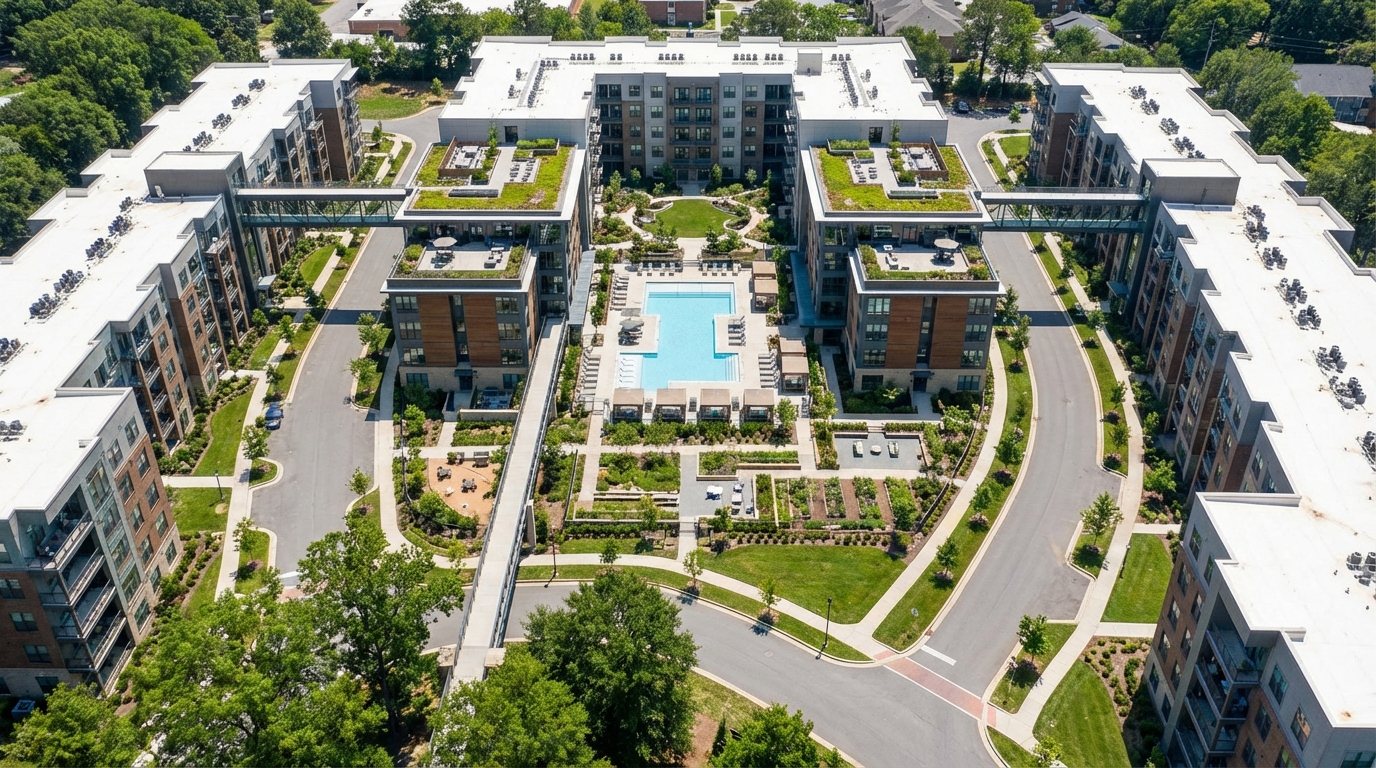
Distressed multifamily buyers in 2026 have fresh CapEx to deploy strategic infrastructure that capital-constrained sellers couldn't afford. Here's how property wide WiFi providers help turn that leverage into 13X returns at exit.
Introduction: The 2026 Distressed Asset Wave
Q4 2025 vacancy data from Cushman & Wakefield revealed a sobering reality: 34 major U.S. multifamily markets are now reporting vacancy rates at or above 10%. Dallas-Fort Worth sits at 12.0%. Phoenix at 13.1%. Austin at 14.3%. Houston at 12.3%.
These aren't normal market corrections. These are double historical norms. Years of elevated construction deliveries from 2022-2024 are working through the system, compressing rents, increasing concessions, and forcing distressed sales throughout 2026.
But here's what most buyers acquiring these distressed assets are missing:
The previous owner may have WANTED to stabilize the property. They may have KNOWN what infrastructure would help. But they couldn't afford it.
You can.
You just raised millions specifically for acquisition and improvements. You have CapEx leverage they didn't.
Their capital constraint was their downfall. Your capital access is your competitive advantage.
Here's how to deploy it strategically in Month 1 with revenue generating WiFi for apartments that works where traditional amenities fail.
Why Distressed Properties Stay Distressed Under New Ownership
Most distressed multifamily acquisitions follow a predictable pattern:
Month 1-3: Fresh paint, new landscaping, upgraded pool furniture
Month 6: Occupancy climbs from 88% to 90%
Month 12: Occupancy at 92%, still offering 2 months free rent
Month 18: Occupancy at 93%—you miss your stabilization target
What happened?
You inherited the root cause of the distress: lack of competitive differentiation. The previous owner was stuck competing on price (concessions). You're doing the same thing with fresh paint.
But here's the critical insight most buyers overlook:
The previous owner couldn't fix the root cause—not because they were bad operators, but because they were capital-constrained.
The Capital Constraint Reality
When you acquire a distressed property, consider what the previous owner was dealing with:
-
Bleeding $38,000/month on vacant units (24 vacancies at $1,600/month rent)
-
Using every available dollar to cover debt service
-
Investors wouldn't approve additional CapEx requests
-
In survival mode, not investment mode
-
Every dollar went to operations, not strategic improvements
They may have KNOWN that installing revenue-generating infrastructure would help stabilize. But they couldn't afford the $200,000 investment while hemorrhaging cash.
You're different.
You raised $X million SPECIFICALLY for acquisition and improvements. Your investors EXPECT you to deploy capital intelligently. You bought the asset WITH the intention of investing. You're capitalized when they weren't.
Their constraint is your opportunity.
The Strategic Infrastructure Play: Revenue-Generating WiFi
Here's what smart distressed asset buyers are doing in Month 1 (not Year 2):
Working with property wide WiFi providers to install fiber backed WiFi for multifamily properties that generates $30-40 per door in monthly ancillary income.
Unlike basic internet service, enterprise WiFi for communities provides move-in ready WiFi solutions with 24/7 supported apartment WiFi that eliminates property management burden while creating documented revenue streams.
Why This Works When Cosmetic Upgrades Don't:
Fresh paint doesn't differentiate when every competing property just painted too. Revenue-generating WiFi addresses what the previous owner COULDN'T do:
-
Creates immediate competitive differentiation (not commodity cosmetic fixes)
-
Generates measurable revenue (not zero-return paint and carpet)
-
Solves the root cause (lack of stickiness and differentiation)
-
Proves your thesis to investors (strategic capital deployment, not cosmetic Band-Aids)
For more on the revenue model specifics, see our Guide to Revenue-Generating Fiber-Backed WiFi.
The 10 Strategic Advantages of Installing WiFi Infrastructure in Month 1
1. Fresh CapEx to Supercharge NOI
You just raised capital for acquisition and improvements. Your investors EXPEC
T intelligent capital deployment. High speed WiFi for MDUs generates immediate NOI boost—unlike paint and carpet that just maintain the asset.
Investor reporting gold: "We deployed $200K into revenue-generating infrastructure the previous owner couldn't afford. We're creating $156K in annual NOI, not just cosmetic improvements."
This approach works across property types—from traditional multifamily to managed WiFi for student housing where bandwidth demands are 3-5x higher than standard apartments.
2. Lower Vacancy at Start = Faster Adoption
You're buying at 88% occupancy. You'll stabilize to 94% within 6-12 months. That means:
-
188 occupied units at acquisition
-
188 units × $35/door = $6,580/month revenue IMMEDIATELY
-
Higher occupancy = better adoption rates from Day 1
-
Revenue ramps FASTER than properties stuck at 88% long-term
Unlike properties that install WiFi at 88% and stay there, you're installing at 88% and climbing to 94%—maximizing adoption and revenue acceleration.
Working with specialized property wide WiFi providers ensures professional installation with zero resident disruption during the critical stabilization phase.
3. Immediate Differentiator to Market
Day 1 after close, your leasing team can market:
"NEW: Move-in ready gigabit WiFi under new ownership. Keys → connected. No Comcast appointments. No 2-week wait. No hassle."
This move-in ready WiFi solution approach separates you from:
-
The previous distressed positioning
-
Competing properties still offering only rent concessions
-
Other distressed buyers doing cosmetic-only upgrades
Your marketing narrative: "Under new ownership with premium infrastructure."
The Haven at Chisholm Trail case study demonstrates how this messaging accelerated occupancy recovery post-acquisition.
4. Exit Timing is Perfect
Typical distressed acquisition hold: 3-5 years.
-
Buy 2026 → Exit 2029-2031
-
Install WiFi Month 1 (2026) = 36-48 months of documented revenue at exit
-
Institutional buyers in 2029 underwrite HISTORY, not promises
Compare to: Install in Year 3 = only 12-24 months of proof at exit.
The earlier you install fiber backed WiFi for multifamily properties, the more documented cash flow you present to institutional buyers at exit.
5. Basis Advantage = Outsized IRR Impact
You bought at distressed pricing. Let's say $30 million (vs. $40 million pre-distress value).
-
WiFi installation: $200K
-
$200K on $30M basis = 0.67% of purchase price
-
Exit value add: $2.6M (documented revenue at 7% cap rate)
-
Return on WiFi investment: 13X
Your IRR calculation looks incredible for investors when a 0.67% capital deployment creates 13X returns.
6. Root Cause Solution, Not Band-Aid
The property was distressed BECAUSE it lacked competitive differentiation. Commodity positioning. No stickiness. Nothing to retain residents beyond location.
The previous owner couldn't stabilize because they couldn't invest in infrastructure that creates differentiation.
You can.
Revenue generating WiFi for apartments addresses WHY vacancy was high—not just temporarily fills units with concessions that train residents to expect discounts.
Whether you're targeting traditional multifamily, affordable housing internet solutions for LIHTC properties, or managed WiFi for student housing, the principle remains: infrastructure creates stickiness that concessions can't.
7. Stabilization Pressure = Investor Expectations
You promised investors: "We'll stabilize to 94% occupancy in 18-24 months."
Every syndicator makes this promise. Not every syndicator delivers.
WiFi accelerates your timeline:
-
Traditional approach: Compete on price → slow lease-up → hit target Month 20-24
-
Infrastructure approach: Compete on value → faster lease-up → hit target Month 14-16
Every month earlier = higher IRR. Every month late = credibility hit with investors.
The 24/7 supported apartment WiFi model ensures resident satisfaction remains high during the critical stabilization phase, with proactive network monitoring that resolves 97% of issues before residents notice them.
8. Capital Already Allocated
You raised money specifically for "property improvements." WiFi qualifies AND generates revenue.
Investor justification is easy: "This improvement pays for itself in 8 months through resident adoption and generates $156K annually thereafter. ROI is 13X at exit. What other improvement are we considering with better returns?"
You don't need to go back to investors for more capital. You're deploying what you already raised.
Most property wide WiFi providers offer flexible deployment options including Fiber to the Unit (FTTU) for premium properties requiring dedicated gigabit connections, or standard fiber-backed WiFi for broader market properties.
9. Competitive Context Advantage
Your competing properties are STILL distressed. Still offering 2 months free rent. Still bleeding cash.
You can position as "premium under new management" immediately:
-
WiFi = tangible proof of upgrade (not marketing spin)
-
Resident perception: "New owners are investing in us"
-
Leasing team has differentiated value prop beyond price
While competitors compete on concessions, you compete on infrastructure.
Enterprise WiFi for communities provides the commercial-grade infrastructure that institutional buyers expect from professionally-managed properties in 2026.
10. Acquisition Thesis Validation
Your thesis to investors: "We can operate this better than the previous owner."
WiFi PROVES that thesis:
-
"We deployed capital into revenue-generating infrastructure previous ownership neglected"
-
"We created measurable returns the previous owner couldn't generate"
-
"We're executing the value-add plan we presented"
This sets up credibility for your NEXT deal with investors. Track record matters.
For operators exploring this strategy, the Multifamily Insiders blog on revenue-generating infrastructure provides extensive case studies and operator insights.
The Syndicator's Strategic Edge: Investor Reporting
If you're a syndicator, WiFi installation isn't just about stabilization—it's about proving your thesis and setting up your next fund raise.
Quarterly Investor Updates: Traditional vs. Strategic
Most syndicators report: "We painted the units, upgraded landscaping, refreshed the pool and fitness center. Occupancy is improving slowly from 88% to 91%. We're offering rent concessions to compete."
Smart syndicators report: "We installed revenue-generating WiFi infrastructure that the previous owner couldn't afford due to capital constraints. We achieved 90% resident adoption in 6 months through our property wide WiFi providers. We're generating $6,160 in monthly recurring revenue ($73,920 annually). Occupancy is accelerating to 94% due to competitive differentiation beyond price. We're executing our value-add thesis with measurable, underwritable returns."
Which update makes investors more confident for the next fund raise?
Setting Up Fund II
When you're raising your next fund, your track record tells the story:
"In Fund I, we acquired distressed assets and deployed capital into revenue-generating infrastructure that previous owners couldn't afford due to capital constraints. We documented 24-30 months of cash flow before exit using fiber backed WiFi for multifamily that institutional buyers could underwrite. We created $2.6 million in value with a $200,000 investment—13X returns. Now we're raising Fund II to replicate this playbook at scale across multiple distressed acquisitions."
This separates you from:
-
Syndicators who just "bought cheap and hoped"
-
Operators who only did cosmetic fixes
-
Competitors who can't articulate measurable value-add
The BiggerPockets community has documented this strategy extensively—see operator discussions on infrastructure-led value-add plays.
Real-World Proof: The Haven at Chisholm Trail
This isn't theoretical. Let's look at a real example.
The Haven at Chisholm Trail (Fort Worth, Texas, 328 units) installed revenue-generating fiber-backed WiFi infrastructure. Within 18 months:
-
90% resident adoption
-
$145,000 annual recurring revenue
-
$2.6 million added to exit valuation when Valiant Residential (NMHC Top 50 syndicate) acquired the property in November 2025
Valiant's acquisition thesis included that documented WiFi revenue. Institutional buyers in 2025 underwrite recurring income streams from move-in ready WiFi solutions with proven resident adoption—they don't underwrite what you gave away in rent concessions.
The previous owner at The Haven made a strategic choice: invest in infrastructure that generates revenue. The result: premium exit to a top-50 national syndicate.
Could the previous owner of YOUR distressed acquisition have done this?
Maybe. But they were capital-constrained. You're not.
The Math: 200-Unit Distressed Acquisition
Let's run the numbers on a typical 2026 distressed acquisition:
At Purchase:
-
200 units
-
88% occupancy (24 vacant units)
-
$30 million acquisition price
-
Vacancy bleeding: $38,400/month ($460,800 annually)
WiFi Installation (Month 1):
-
Installation cost: $200,000 (0.67% of purchase price)
-
Install time: 60-90 days with experienced property wide WiFi providers
-
Revenue (after stabilization to 94%): $35/door × 188 occupied units = $6,580/month = $78,960/year 1
Year 1 Impact:
-
Occupancy acceleration (competitive differentiation): Stabilize to 94% by Month 14 (vs. Month 20 traditional)
-
Vacancy reduction: 24 units → 12 units = $19,200/month recovered rent
-
WiFi revenue: $6,580/month
-
Total monthly NOI increase: $25,780
At Exit (2029, 36 months documented WiFi revenue):
-
WiFi revenue (94% occupancy): $35/door × 188 units × 12 months = $78,960 annually
-
Exit cap rate: 7%
-
WiFi value add: $78,960 ÷ 0.07 = $1,128,000
-
Plus accelerated stabilization value: Stabilize 6 months earlier = 6 months less vacancy loss = $115,200 saved
-
Total value creation: $1,243,200+ from $200,000 investment
-
ROI: 6X+ (conservative estimate)
This doesn't include the retention benefits (residents stay for connectivity) or the reduced concession costs (differentiation vs. price competition).
For additional case studies and operator experiences, explore Multifamily Insiders' revenue-generating WiFi content.
Technology Considerations: Fiber vs. Cable Infrastructure
A critical decision for distressed asset buyers: infrastructure type matters.
Fiber Backed WiFi for Multifamily:
-
Symmetrical upload/download speeds (500 Mbps both directions)
-
Future-proof for AI tools, cloud computing, AR/VR applications
-
99.9% uptime SLA
-
Lower latency, higher reliability
Cable-Based Alternatives:
-
Asymmetrical speeds (500 Mbps download, only 35 Mbps upload)
-
Insufficient for remote work, content creation, gaming
-
Shared bandwidth = congestion during peak hours
Institutional buyers in 2026 specifically seek fiber backed WiFi for multifamily in acquisition underwriting. Cable infrastructure is increasingly viewed as obsolete.
For properties requiring maximum performance, Fiber to the Unit (FTTU) delivers dedicated fiber connections directly to each unit, providing the gold standard of connectivity at $1,200-$1,500 per door installation cost.
Whether deploying high speed WiFi for MDUs in dense urban environments, managed WiFi for student housing on university campuses, or affordable housing internet solutions for LIHTC properties, fiber infrastructure provides the performance and reliability residents expect in 2026.
The CapEx Leverage Conversation
When you're evaluating what to install in Month 1, ask yourself:
"What could the previous owner NOT afford to do that I CAN afford?"
If the answer is "paint and carpet," you're not deploying a competitive advantage—you're doing table stakes maintenance.
If the answer is "revenue-generating infrastructure that requires $200K upfront investment," you're using your CapEx leverage strategically.
The previous owner was capital-constrained. They were in survival mode. Every dollar went to operations.
You just raised millions with investor expectation of intelligent deployment.
Their constraint is your opportunity. Use it.
Working with specialized property wide WiFi providers who understand distressed asset dynamics ensures smooth deployment during the critical stabilization phase. The 24/7 supported apartment WiFi model means property managers never field technical complaints while residents enjoy enterprise-grade connectivity from Day
For operator discussions on execution tactics, the BiggerPockets multifamily forum provides extensive community insights.
Objections Handled
"We need to stabilize occupancy first, then add amenities."
That's what the previous owner thought. They stayed stuck at 88% until forced to sell. Revenue generating WiFi for apartments IS your stabilization strategy—it's the competitive differentiator they couldn't afford. You have the CapEx they didn't. Deploy it in Month 1, not after stabilization.
"We're focused on unit renovations right now."
Unit renovations are what every distressed buyer does. You'll compete with 10 other "newly renovated" properties offering concessions or even a plethora of new builds. WiFi is what the previous owner COULDN'T afford due to capital constraints. It's your competitive advantage through specialized property wide WiFi providers. Use it.
"Capital is tight after acquisition."
You raised $X million for improvements. WiFi is $200K (0.67% of a $30M purchase) and generates $78K+ annually. The previous owner couldn't afford this—that's WHY the property was distressed. You CAN afford it. That's your advantage.
"We'll consider it in Year 2."
By Year 2, you've lost 12-24 months of revenue ($78K-$156K) and you'll only have 12-24 months of documented cash flow at exit instead of 36-48. Plus you've wasted 12 months competing on price like the previous owner. Install Month 1 with enterprise WiFi for communities infrastructure, maximize returns.
"Previous owner tried WiFi, didn't work."
Critical question: Did they have property-wide fiber backed WiFi for multifamily with 24/7 supported apartment WiFi, or did they just allow residents to get Comcast individually? There's a massive difference. Modern move-in ready WiFi solutions with proactive monitoring and revenue-sharing models create the stickiness that traditional ISP arrangements cannot.
Conclusion: The 2026 Distressed Asset Playbook
Q4 2025 vacancy crisis is creating a wave of distressed multifamily sales throughout 2026. Buyers with fresh capital have one strategic advantage: the ability to deploy infrastructure investments that capital-constrained sellers couldn't afford.
The previous owner may have wanted to stabilize. They may have known what would help. But they were bleeding cash and couldn't invest strategically.
You're different. You have CapEx leverage they didn't.
Deploy it in Month 1:
-
Partner with experienced property wide WiFi providers
-
Install fiber backed WiFi for multifamily (or FTTU for premium properties)
-
Implement move-in ready WiFi solutions with 24/7 supported apartment WiFi
-
Create immediate competitive differentiation beyond price
-
Generate $30-40/door monthly recurring income
-
Document 36-48 months of cash flow before exit
-
Prove your acquisition thesis to investors with measurable execution
-
Set up credibility for your next fund raise
Whether you're targeting traditional multifamily, managed WiFi for student housing, affordable housing internet solutions, or enterprise WiFi for communities, the playbook remains: use your CapEx leverage to deploy revenue-generating infrastructure the previous owner couldn't afford.
Their capital constraint was their downfall. Your capital access is your competitive advantage.
Use it strategically.
Additional Resources:
-
Guide to Revenue-Generating Fiber-Backed WiFi - Complete ROI calculator and deployment guide
-
The Haven at Chisholm Trail Case Study - Full breakdown of Fort Worth's $2.6M value-add exit
-
BiggerPockets: WiFi Revenue Discussion - Operator insights and community discussion
Ready to discuss how revenue-generating WiFi fits your distressed acquisition strategy? Contact Fiber Stream to model the ROI on your specific property .
50
50 views
0
0 comments
Post not marked as liked
Revenue & ROI
Related from Fiber Stream
- Property-wide WiFiThe managed amenity behind the revenue
- Get A QuoteDoor count in, revenue projection back
- More Revenue & ROI articles
Want this working at your property?
Send us your door count and we'll return a quote with a revenue projection.
Get a quote