Fiber Backed WiFi for Multifamily

Fiber backed WiFi for multifamily refers to property-wide wireless networks built on fiber optic infrastructure (FTTH or FTTU) rather than cable or DSL connections. This provides symmetrical upload and download speeds—critical for 2026 applications like AI tools, cloud computing, video conferencing, and AR/VR experiences. While cable ISPs typically offer 500 Mbps download with only 35 Mbps upload, fiber backed WiFi delivers 500 Mbps or more in BOTH directions. Multifamily properties using fiber backed WiFi experience 99.9% uptime, lower latency, and future-proof connectivity that supports high-density resident usage across hundreds of concurrent devices. Institutional buyers in 2026 prioritize fiber backed WiFi for multifamily over cable-based alternatives.
Related terms: Fiber to the home (FTTH), fiber to the unit (FTTU), gigabit infrastructure, symmetrical internet
Move-In Ready WiFi Solutions
Move-in ready WiFi solutions provide immediate internet connectivity the moment residents receive their keys—no installation appointments, no waiting for technician visits, no friction. This turnkey approach eliminates the 7-14 day delay residents typically experience with traditional ISPs, improving resident satisfaction and reducing property management burden. Move-in ready WiFi solutions include pre-installed enterprise-grade access points, automatically provisioned resident accounts, and 24/7 US-based support. Properties offering move-in ready WiFi solutions see higher occupancy rates, improved resident retention, and competitive differentiation in tight rental markets. For property owners, this means Day 1 connectivity that reduces move-in friction and support tickets by 83%.
Related terms: Day 1 connectivity, turnkey WiFi, seamless onboarding, instant internet access
Property Wide WiFi Providers

Property wide WiFi providers are specialized companies that design, install, manage, and support enterprise-grade wireless networks across multifamily communities, student housing, senior living, and planned developments. Unlike traditional ISPs (Comcast, Spectrum, AT&T) that offer in-unit service requiring individual installations, property wide WiFi providers deliver seamless connectivity throughout all units, common areas, courtyards, pools, and amenities with 99.9% uptime SLAs. The best property wide WiFi providers offer revenue-sharing models, 24/7 proactive monitoring, US-based technical support, and complete white glove service—ensuring property owners profit from internet service while residents enjoy superior connectivity without the property management team fielding complaints.
Related terms: Managed WiFi service providers, multifamily internet providers, enterprise WiFi vendors
Managed Service Provider (MSP) / Managed WiFi
A Managed Service Provider (MSP) for multifamily properties is a specialized IT support company that remotely handles network infrastructure, internet connectivity, and technical services for apartment communities, student housing, and planned developments. Managed WiFi services from an MSP include bandwidth management, policy management, network monitoring, compliance management, maintenance, end-user technical support, and 24/7 remote troubleshooting. Unlike basic internet service providers (ISPs) that only deliver connectivity, MSPs take full operational responsibility for network performance, security, and resident satisfaction. Properties using Managed Service Provider solutions for WiFi typically see 83% reduction in support tickets, 99.9% uptime SLAs, and significantly improved resident satisfaction scores. The best MSPs for multifamily offer white glove service that ensures property managers never deal with technical complaints while residents enjoy enterprise-grade connectivity.
Related terms: Managed WiFi services, IT service provider, network operations center (NOC), remote network management
24/7 Supported Apartment WiFi

24/7 supported apartment WiFi means residents receive round-the-clock technical assistance from US-based support teams who proactively monitor network performance and resolve issues before residents notice them. Unlike traditional bulk internet for apartments where residents call the property office with technical complaints (and property managers have no ability to fix ISP issues), 24/7 supported apartment WiFi includes enterprise-level network operations centers that detect and resolve 97% of issues remotely. This white glove support model means property managers NEVER deal with internet complaints, residents experience minimal downtime, and properties maintain high satisfaction scores. For properties with revenue generating WiFi, 24/7 supported apartment WiFi protects both resident experience and the property's monthly ancillary income stream.
Related terms: White glove WiFi support, proactive network monitoring, concierge internet service, managed NOC services
High Speed WiFi for MDUs (Multi-Dwelling Units)

High speed WiFi for MDUs addresses the unique technical challenges of delivering reliable internet to multi-dwelling unit environments with dozens or hundreds of concurrent users in close proximity. High-density WiFi environments require enterprise-grade access points with advanced features like band steering, airtime fairness, and interference mitigation to maintain performance when 200+ residents are simultaneously streaming, gaming, video conferencing, and using smart home devices. Properties using high speed WiFi for MDUs typically deploy 802.11AX (WiFi 6 or WiFi 6E) technology on fiber-backed infrastructure, delivering symmetrical gigabit speeds even during peak evening usage hours. This ensures consistent performance across all units, regardless of location or concurrent network load.
Related terms: Multi-dwelling unit internet, high-density WiFi, apartment WiFi infrastructure, MDU connectivity
Managed WiFi for Student Housing
Managed WiFi for student housing is a specialized service designed to handle the extreme bandwidth demands and technical support requirements of college and university residential properties. Student housing environments typically experience 3-5x higher bandwidth consumption than traditional apartments due to gaming, streaming, large file uploads for coursework, and concurrent device usage (students average 7-9 connected devices each). Managed WiFi for student housing includes 24/7 support during critical periods (finals week, move-in), optimized network configurations for gaming and streaming, robust upload capacity for cloud-based coursework, and proactive monitoring to handle the unique challenges of serving tech-savvy residents with high expectations. Properties offering managed WiFi for student housing see reduced support burden and competitive advantage in student retention and leasing velocity.
Related terms: University housing internet, college apartment WiFi, student housing connectivity
Enterprise WiFi for Communities
Enterprise WiFi for communities brings corporate-grade wireless technology to residential environments including HOAs, planned communities, gated neighborhoods, and large multifamily campuses. This infrastructure uses commercial-grade access points, centralized cloud management platforms, and professional network design to deliver reliability and performance that consumer-grade equipment cannot match. Enterprise WiFi for communities includes features like guest network separation, bandwidth management, device prioritization, security protocols, and scalability to support hundreds or thousands of users. Institutional property owners and REITs in 2026 require enterprise WiFi for communities rather than consumer solutions, as only enterprise-grade infrastructure provides the uptime SLAs, security compliance, and management capabilities needed for commercial property operations.
Related terms: HOA WiFi infrastructure, planned community internet, commercial-grade residential WiFi
Affordable Housing Internet Solutions
Affordable housing internet solutions provide high-quality, reliable connectivity to LIHTC properties, subsidized housing communities, and workforce housing developments—bridging the digital divide for residents who need internet access for employment, education, telehealth, and essential services. Properties using affordable housing internet solutions can structure service as an included amenity (covered by operating budgets or grants) or as a low-cost resident option ($20-35/month) that's significantly below retail ISP pricing. These solutions help affordable housing properties meet digital equity requirements, support resident success outcomes, and qualify for federal programs like the Affordable Connectivity Program. Properly structured, affordable housing internet solutions can even generate modest ancillary income while keeping resident costs low.
Related terms: LIHTC property internet, subsidized housing WiFi, digital equity solutions, workforce housing connectivity
Fiber to the Unit (FTTU)
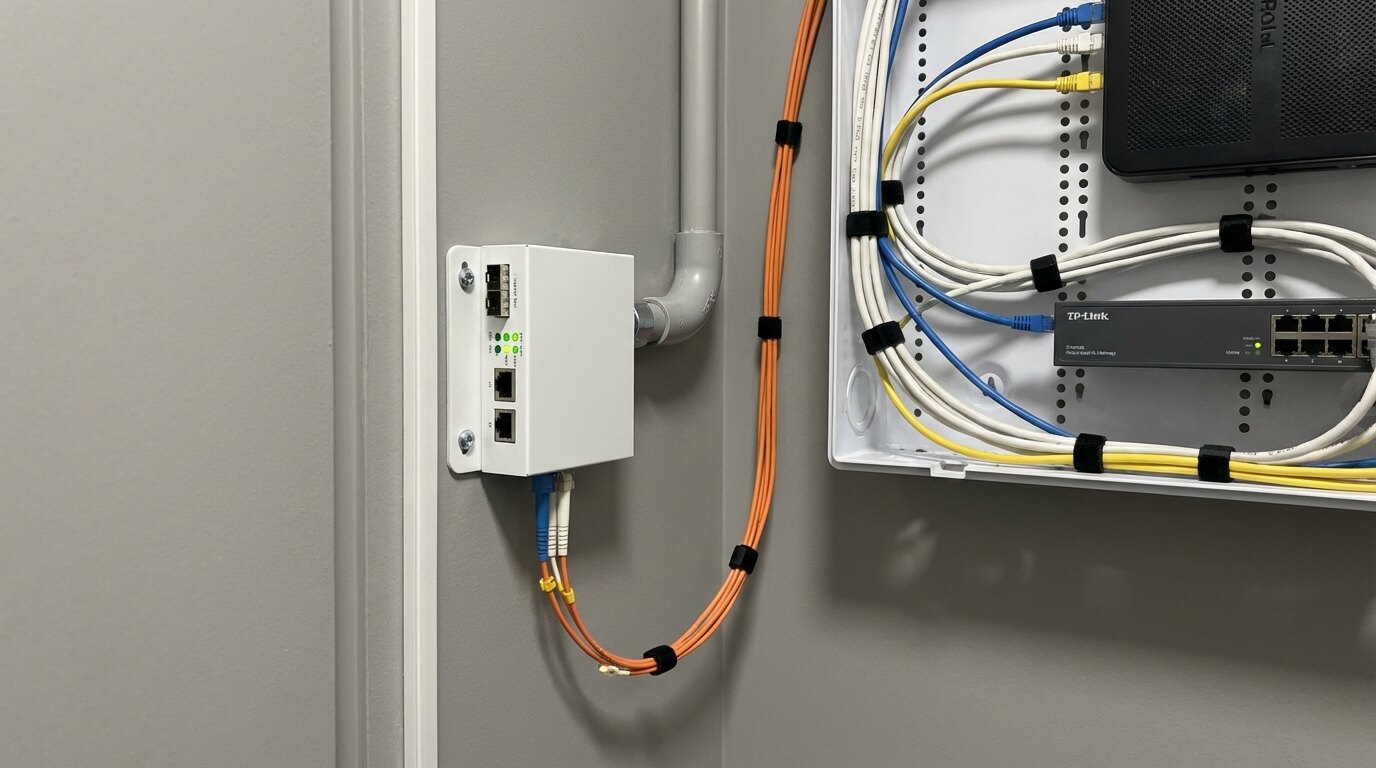
Fiber to the Unit (FTTU) delivers dedicated fiber optic connections directly to each individual apartment unit within a multifamily property, typically requiring media converters to convert fiber signals to Ethernet. FTTU represents the gold standard of last-mile internet delivery, providing dedicated bandwidth per unit (not shared among residents), symmetrical gigabit speeds, ultra-low latency, and future-proof infrastructure that supports emerging technologies. Installation costs average $1,200-$1,500 per door, compared to $1,000 per door for standard fiber-backed WiFi, but FTTU enables premium pricing models and maximum resident bandwidth. FTTU is particularly valuable for luxury multifamily properties, tech-forward communities, and properties targeting remote workers who require dedicated high-performance connections for video conferencing and large file transfers.
Related terms: Fiber to the home (FTTH), dedicated fiber, fiber optic last mile
Micro-Segmentation
Micro-segmentation divides one shared property network into thousands of individually isolated private networks — one per resident account — instead of dropping every apartment onto the same flat network. Each resident's devices can see and talk to each other (phone to smart TV, laptop to wireless printer, console to speaker) while remaining completely invisible to every other unit in the building. Traffic between segments is blocked by policy at the network layer, not by a password, so a neighbor cannot browse shared folders, hijack a casting session, or scan another resident's devices.
For property owners, micro-segmentation is what makes property-wide WiFi enterprise-grade rather than a large public hotspot: it contains malware and compromised devices to a single unit, keeps staff and amenity systems on their own protected segments, and reduces liability tied to resident-to-resident snooping. Because each segment travels with the account, a resident keeps the same private network in a common area, at the pool, or after transferring to a different unit — no re-onboarding of devices required.
Related terms: network segmentation, per-unit VLAN, private resident network, device isolation, zero trust WiFi